Bulverde · Boerne · Spring Branch · Texas Hill Country
Process dense cedar and woody brush directly on the property, leaving a mulch layer behind while opening usable land and preserving selected vegetation where conditions allow.
Forestry mulching is a land-clearing method that mechanically cuts and processes woody vegetation into mulch at the work area. It can be a strong fit where dense cedar, brush and saplings have taken over acreage and the goal is to open the property without creating the same volume of loose piles for separate handling.
Process woody overgrowth that is beyond what normal acreage mowing or shredding is designed to handle.
Reclaim areas where vegetation has reduced access, visibility or usable ground.
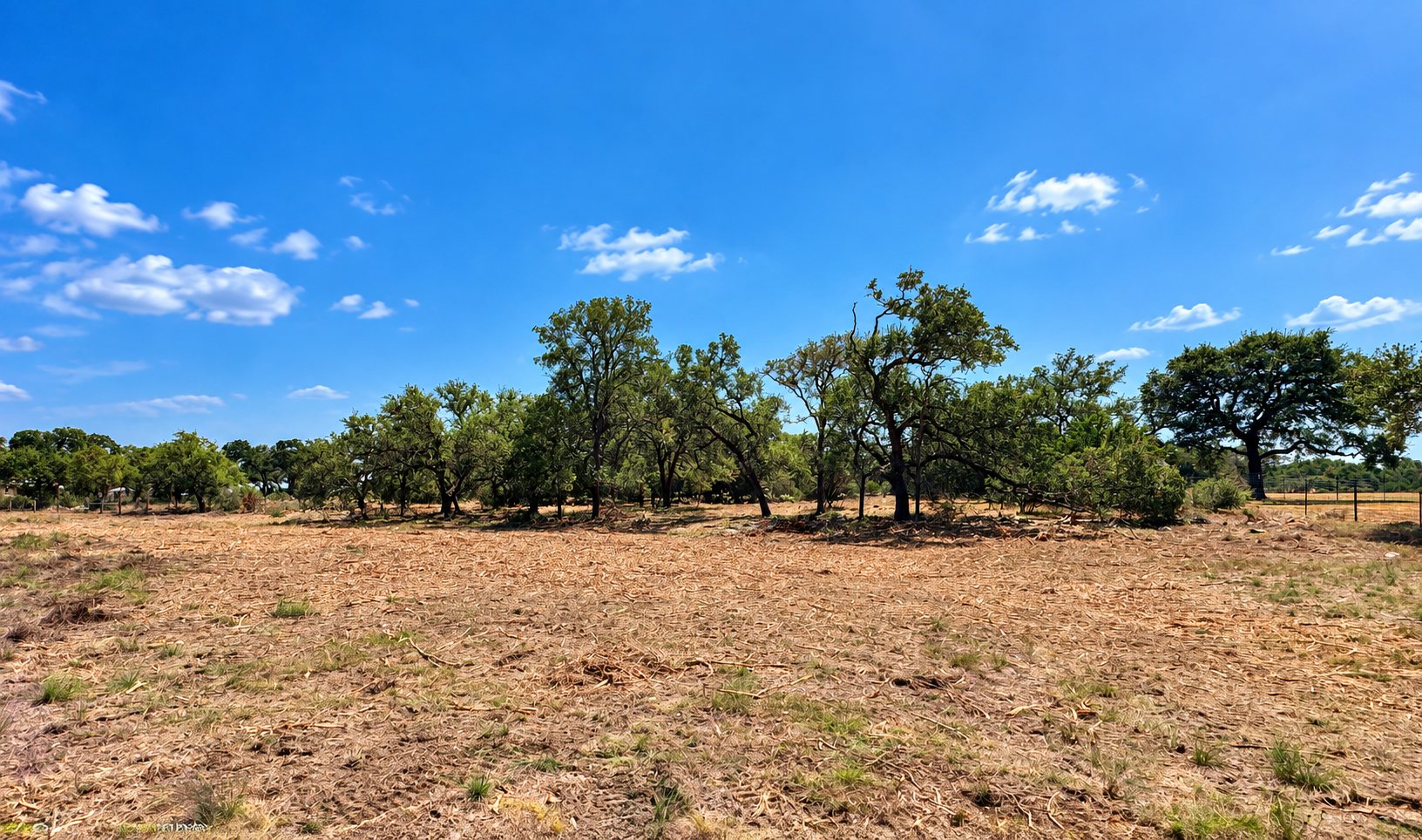
Work around selected mature vegetation where spacing, roots, access and terrain allow.
Open land before future access, grading, driveway or other property improvements.
Improve movement through larger properties and make neglected areas easier to manage.
Reduce dense woody growth where that fits the property plan and site conditions.
Identify the areas to open, vegetation to preserve, access constraints and the finished condition you want.
Vegetation density, stem size, rock, slope and equipment access determine how the property can be approached.
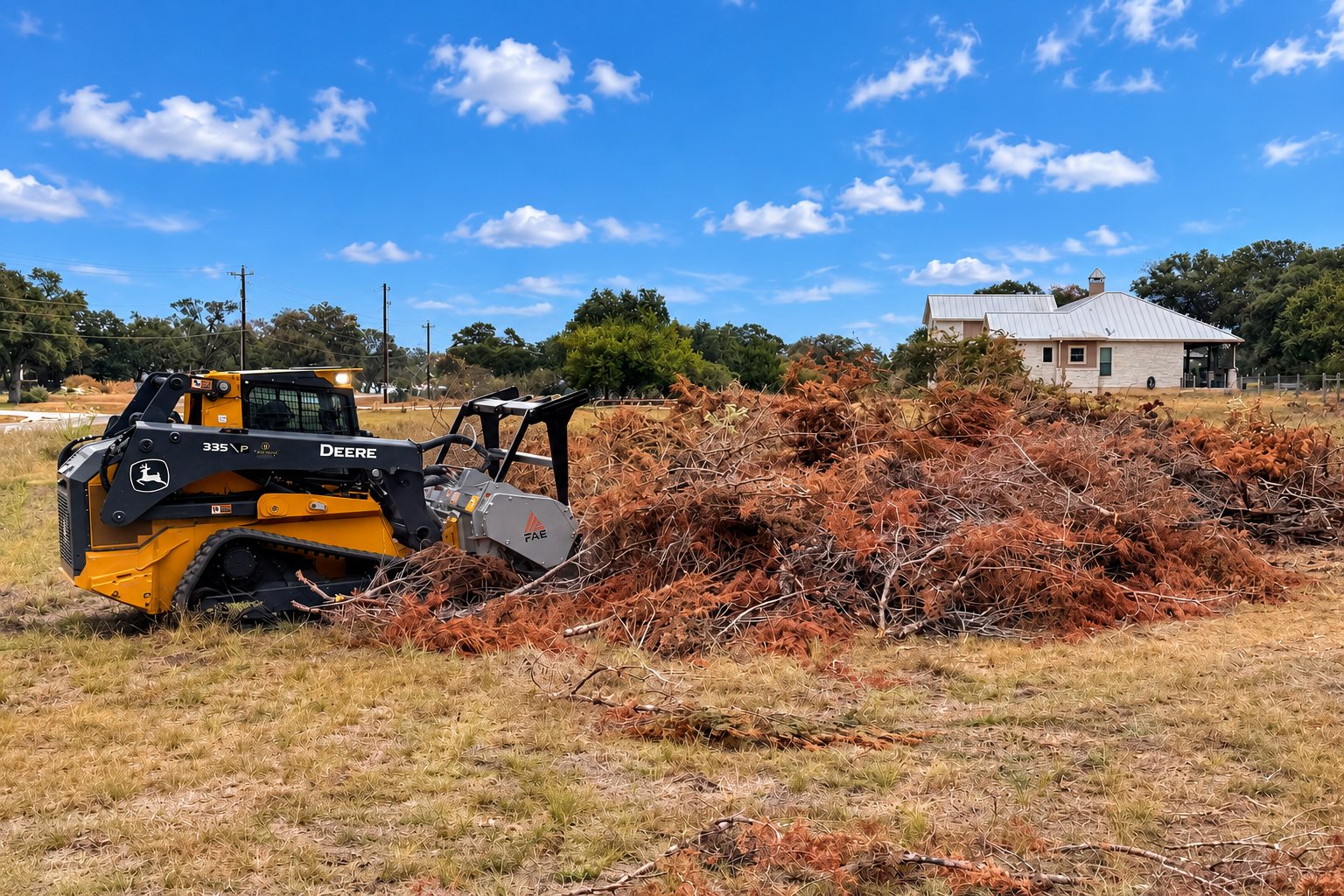
Woody growth is mechanically reduced and spread across the work area rather than simply cut and left in large piles.
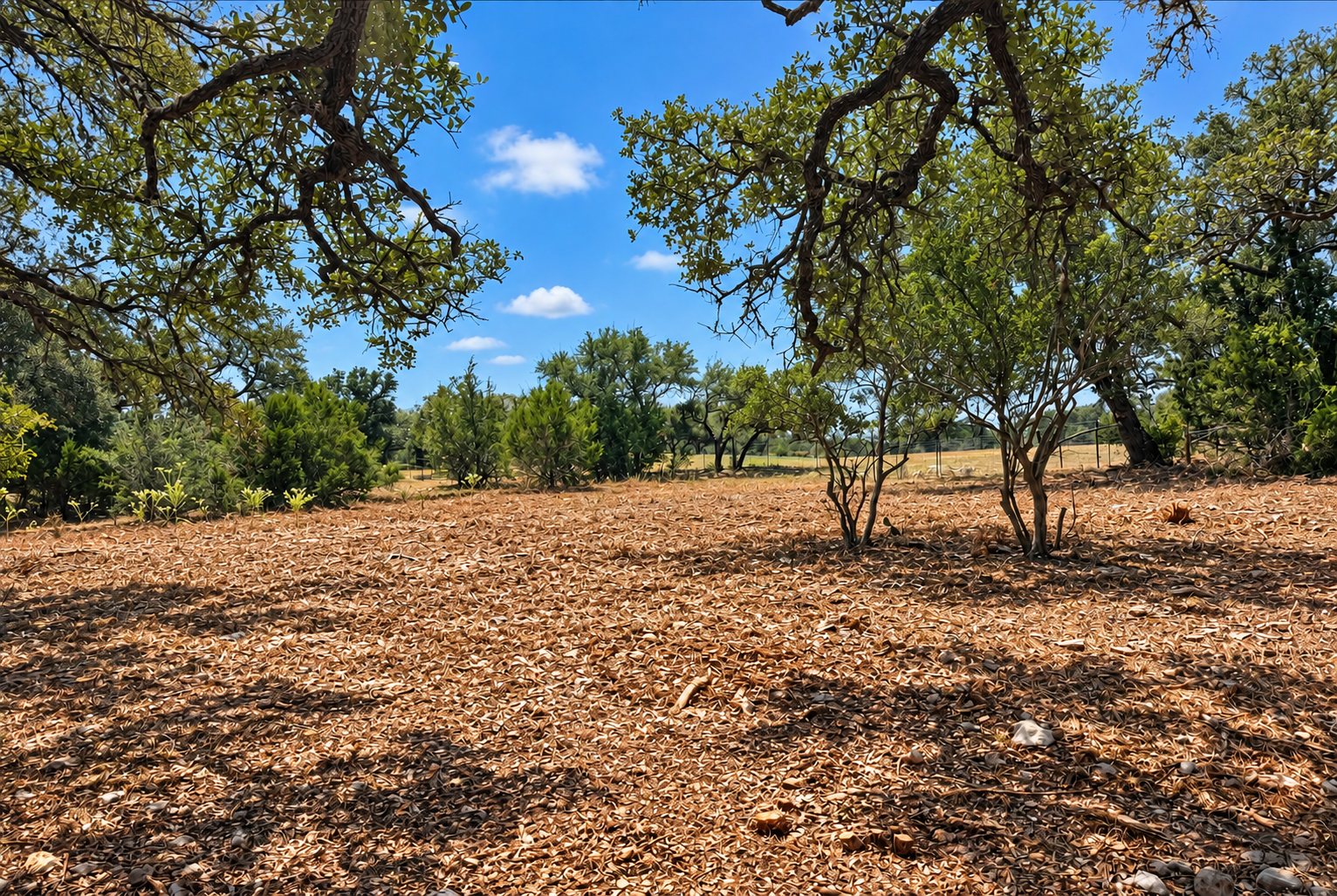
Processed vegetation is left on site as a mulch layer that can help protect the soil surface, retain moisture and add organic material as it breaks down. The depth and appearance vary with the vegetation, terrain, machine access and project scope.
Forestry mulching is not the same as importing finished landscape mulch. It is the processed material from the vegetation already on the property, and the finished result should be evaluated in that context.
Forestry mulching is highly effective for many woody-vegetation problems, but not every property or finished goal calls for the same method.
Mulching can reduce material above the surface, but stump and root removal are different scopes and should not be assumed unless specifically included.
Tree size, species, condition, spacing and the desired result all matter. Larger-tree removal may require a different method.
Hill Country rock, terrain, gates and working-room constraints can affect production, equipment access and the finished result.
Best suited to dense woody vegetation that can be processed in place with the resulting mulch left on site.
If the goal is to clear a larger portion of the property for a future use, start with the broader land-clearing scope and choose the method from there.
Explore Land Clearing →Selective removal, mixed cleanup scopes, piles or targeted cedar work may fit better when material needs to be moved or consolidated.
Explore Brush & Cedar Clearing →Brush hogging uses tractor-mounted rotary equipment to cut grass, weeds and manageable light woody growth. Forestry mulching is intended for heavier woody vegetation and a different finished result. If the property is mostly mowable but simply overgrown, Acreage & Tractor Mowing may be the better starting point.
Forestry mulching is not accurately priced from acreage alone. Two properties of the same size can require very different amounts of work.
Thicker growth means more material to process and can reduce production speed.
Diameter and vegetation type affect how efficiently material can be processed.
Exposed rock, uneven ground and slope can change the approach and production rate.
Gate width, approach, working room and distance into the property matter.
Working carefully around vegetation the owner wants to preserve can require more time than a broad open-area pass.
The level of processing and the condition expected at completion are part of the scope.
The next step depends on the property goal. Some areas may simply be left with the processed mulch layer. Others may transition into mowing, access improvements, erosion or drainage work, seeding or future property development. Two Sons can help evaluate what makes sense after the clearing work is complete.
There is no reliable universal production rate. Vegetation density, stem size, rock, slope, access, selective retention and the desired finish can make two acres behave very differently.
Forestry mulching can reduce vegetation and material above the surface, but full stump and root removal are separate scopes and should not be assumed unless specifically included.
It depends on the vegetation, machine, terrain and project goal. Larger trees may require a different removal method, so tree size should be evaluated as part of the site plan.
Typically, yes. A key feature of forestry mulching is processing vegetation in place and leaving the resulting material across the work area rather than creating the same volume of loose brush for hauling.
Often, yes. Spacing, root zones, rock, slope and equipment access all affect how selectively the work can be performed.
It can be a strong option for dense cedar and mixed woody brush when site conditions and the desired finished result fit the method.
Land clearing describes the broader property outcome. Forestry mulching is one specific clearing method that processes woody vegetation into mulch in place. See Land Clearing.
They solve different vegetation problems. Brush hogging is best for mowable acreage and manageable light growth; forestry mulching is intended for heavier woody vegetation. See Acreage & Tractor Mowing.
Send the property address, approximate acreage and photos of the vegetation and access. We’ll help determine whether forestry mulching is the right fit.
Request an Estimate