Bulverde · Boerne · Spring Branch · Texas Hill Country
Mowing for vacant, undeveloped, overgrown and large properties—from one-time cleanup cuts to recurring seasonal maintenance.
Two Sons provides tractor mowing for properties that need more than a finish mower. The goal is to make overgrown land easier to access, easier to manage and better prepared for the owner's next use.
Maintain larger tracts that have become too tall, rough or overgrown for conventional mowing equipment.
Cut tall grass and seasonal vegetation to improve access, visibility and overall manageability.
Use tractor-mounted rotary equipment to cut heavier vegetation and manageable light woody growth.
Vacant land can become difficult to access surprisingly quickly when several growing seasons stack up. Periodic mowing can keep future homesites, access routes and open areas from disappearing into unmanaged growth.
Keep planned building areas and access routes visible and easier to evaluate before construction begins.
Maintain land even when the owner lives elsewhere and wants a reliable local company to keep an eye on growth.
For many vacant properties, a seasonal or semiannual schedule can be enough to prevent years of unmanaged buildup.
Keep drive-in areas, paths and open ground usable so the property remains easier to inspect and improve.
Reduce tall grass and weeds before they become denser, harder to traverse and more expensive to reset later.
Regular mowing can help keep property workable before later clearing, grading, driveway or homesite projects.
Property owners use several terms for this type of work. Brush hogging, bush hogging, shredding and tractor mowing all generally refer to cutting rougher or taller vegetation with tractor-mounted rotary equipment. The exact approach depends on vegetation, terrain, access and the finish you want.
Rotary mowing works best where the property is still fundamentally mowable. The heavier the woody growth becomes, the more likely a clearing method is the better fit.
Tall grass, weeds and seasonal vegetation are the most straightforward mowing conditions.
Some small, manageable saplings and light brush can be cut depending on size, density, terrain and equipment conditions.
When woody vegetation becomes too dense or too large to mow efficiently, Brush & Cedar Clearing or Forestry Mulching may be the better starting point.
There is no single schedule that fits every property. Growth rate, rainfall, vegetation type, access needs and the owner's goals all matter. Some properties may need only an annual cut, while others benefit from twice-yearly or seasonal service.
Read the full guide: How Often Should You Mow Vacant Acreage? →
A once-a-year cut may be enough where the goal is simply to prevent long-term unmanaged growth.
Twice-yearly mowing can be a good fit for future-build properties and owners who want the land consistently easier to access.
Properties with faster growth, access requirements or specific appearance goals may need a schedule tailored to the site.
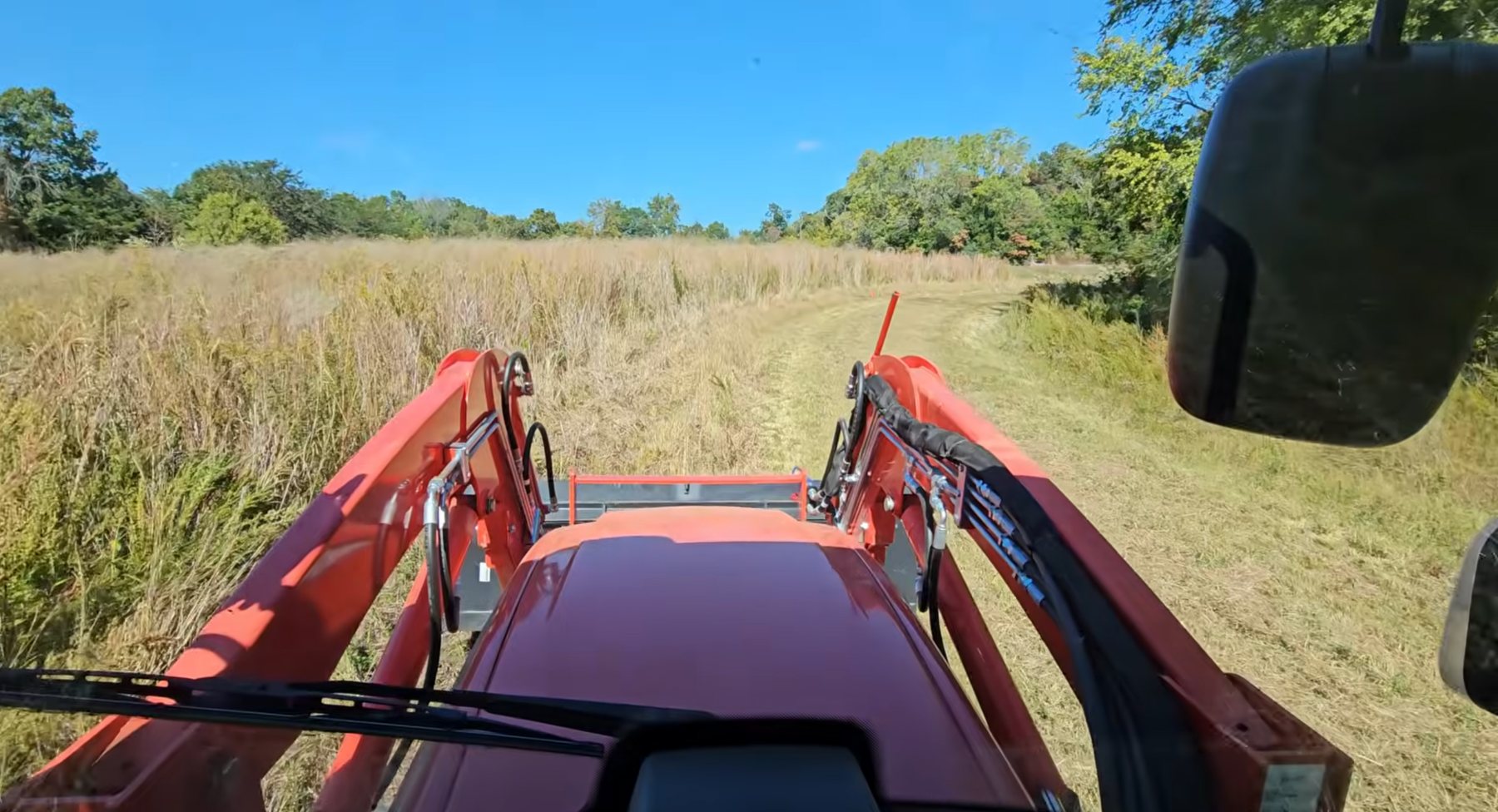
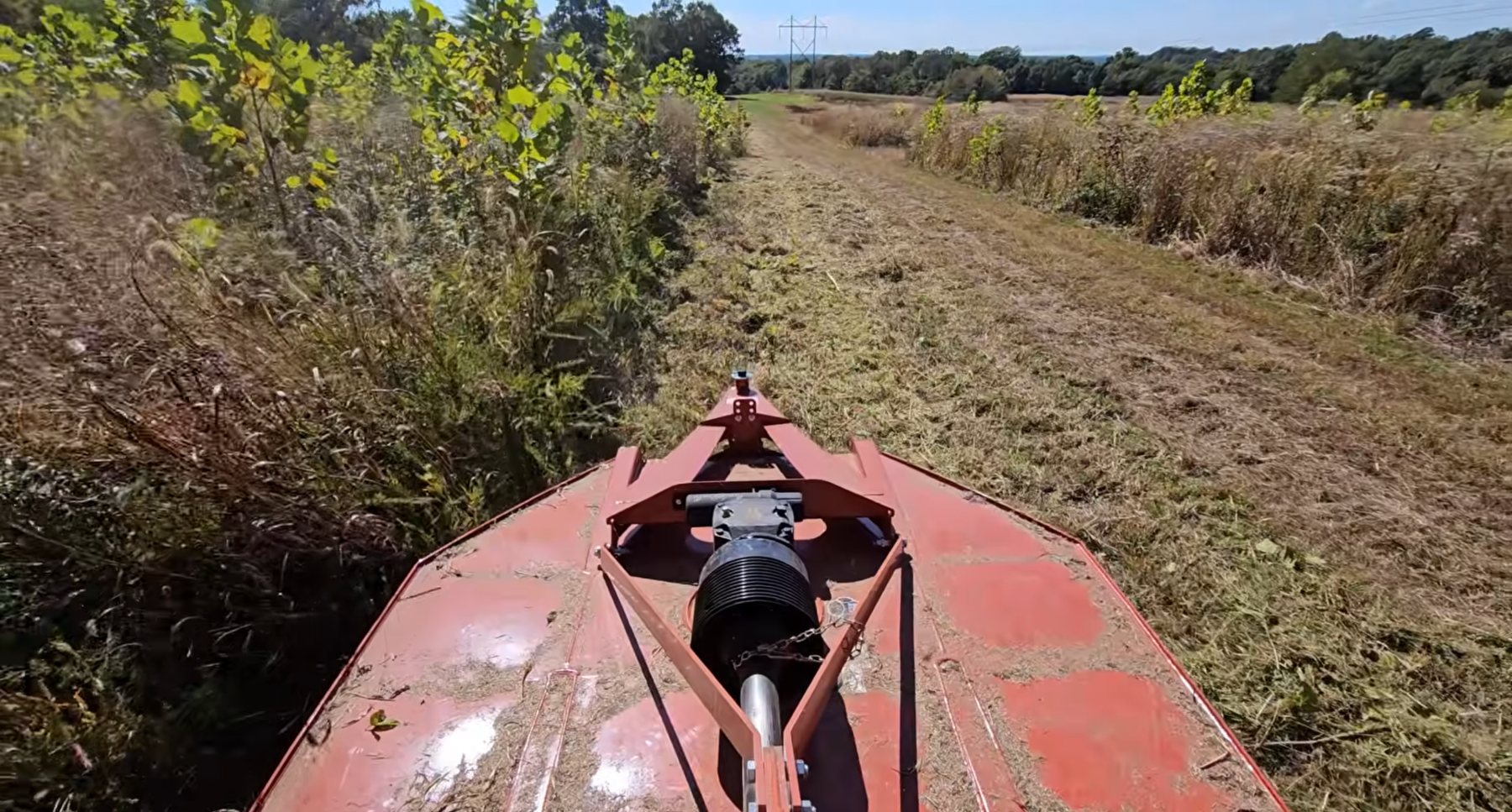
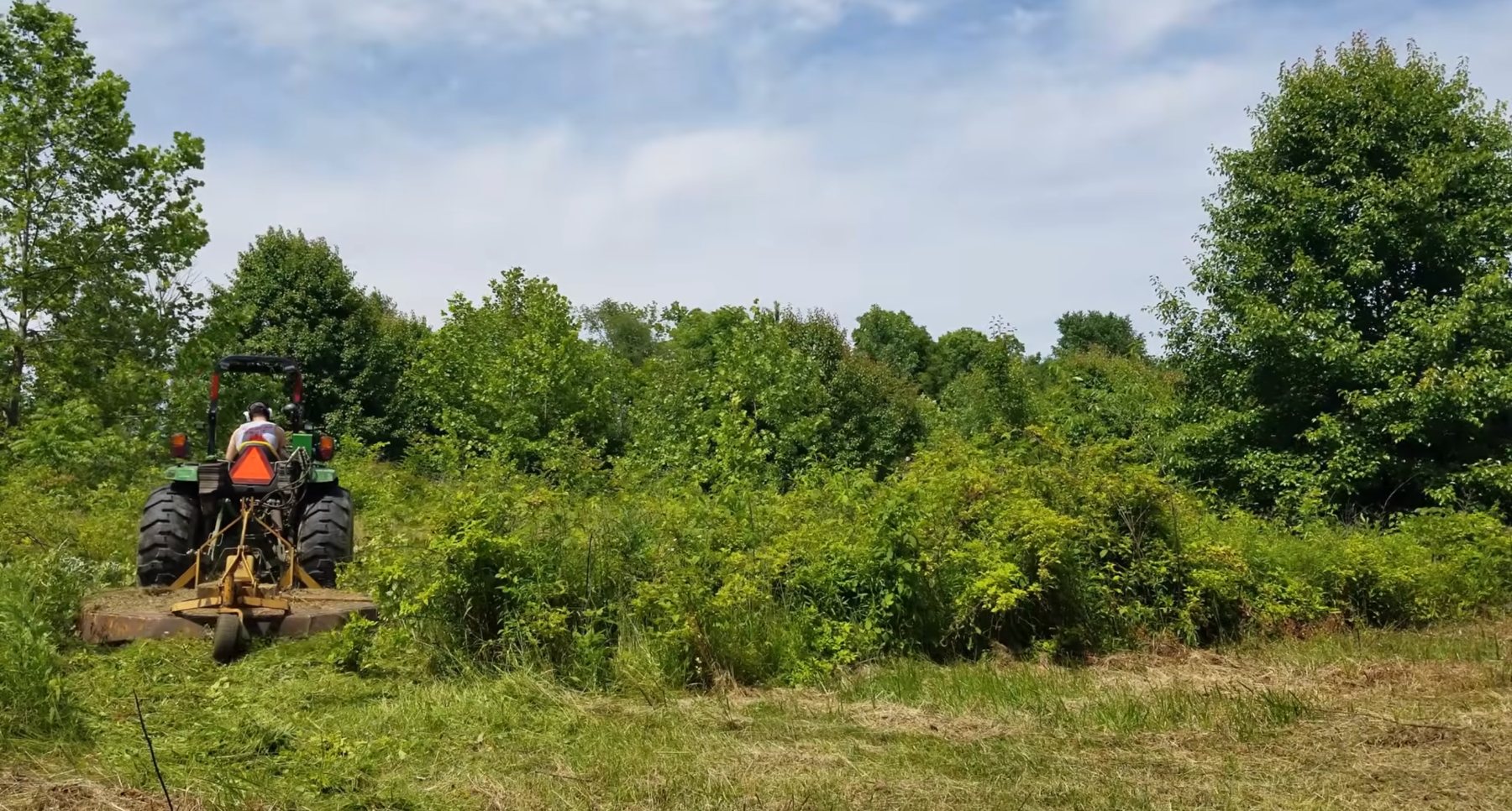
Yes. Vacant and undeveloped properties are a strong fit for tractor mowing when the vegetation is still mowable and the goal is to keep the land accessible and manageable.
It depends on rainfall, growth rate, vegetation and the owner's goals. Some properties may need only one cut per year, while others benefit from two or more seasonal visits.
Yes. Recurring mowing can be arranged for absentee owners who want a local company to maintain the property on an agreed schedule.
They are often overlapping terms. Brush hogging usually emphasizes rougher vegetation cut with a tractor-mounted rotary cutter, while acreage mowing is the broader service description.
Once woody vegetation becomes too dense, too large or too difficult to safely mow around, clearing may be more efficient. The right method depends on the actual site conditions.
Often, yes. Spacing, terrain, visibility and equipment access determine how selectively the area can be mowed.
Yes, where mowing is an appropriate first step. Keeping a future-build property cut can improve access and visibility before later clearing, driveway, grading or homesite work begins.
Yes. Annual and semiannual schedules are common starting points for properties where the goal is to prevent unmanaged growth rather than maintain a lawn-like appearance.
Those areas may need Brush & Cedar Clearing or Forestry Mulching while the remaining mowable acreage stays on a recurring mowing schedule.
Send the address, approximate acreage and a few photos so we can evaluate access, vegetation and the right equipment.
Request an Estimate